Kitchen Exhaust Cleaning in Kitchener
Kitchen Exhaust Cleaning in Kitchener is the removal of grease from the sealed duct that carries cooking air out of the building, from the collar on top of the hood, along the horizontal run above the ceiling, and up the vertical riser to the roof. The duct is opened at each access panel, scraped and degreased section by section, photographed before and after, and listed on a signed health and safety certificate referencing the published NFPA 96 standard. Older mixed-use blocks in Downtown Kitchener and Uptown Waterloo, where several tenants share one riser, get a mapped plan before any panel comes off.
Commercial kitchen exhaust cleaning: the collar, the run and the riser
The horizontal run leaves the hood and travels above the drop ceiling, sometimes across half the building, before it can turn upward. Grease cools as it travels, so it settles on the floor of the run and pools at every elbow.
The vertical riser climbs through the floors above to the roof. In a single-storey plaza it is short. In a three-storey brick block on King Street it passes through apartments or offices, wrapped in a fire-rated enclosure you never see.
The access panels are bolted, gasketed doors cut into the duct wall. Every section that gets cleaned is reached through one. A section with no panel cannot be reached, so the certificate names it as uncleaned rather than pretending otherwise.
Kitchen exhaust cleaning services: hood-only vs full-system
| Scope item | Hood-only cleaning | Hood-only vs full-system: full-system cleaning |
|---|---|---|
| Where the work stops | At the duct collar on top of the hood. | At the top of the riser, where the duct meets the rooftop fan. |
| Ceiling tiles and panels | Untouched. | Tiles lifted along the run, every panel unbolted and resealed. |
| What the certificate can say | The hood assembly only. | Each duct section by location, with any unreachable section named. |
| When it fits | Between full cleanings, on a light-use line. | When an insurer, landlord or fire inspector asks about the whole system. |
| Hidden risk left behind | Grease pooled in elbows and in the riser. | Only sections with no access panel, listed in writing. |
Canopy, filter and plenum work is described on the hood cleaning services page. The fan at the top of the riser has its own page for exhaust fan repair and installation.
Duct cleaning for restaurants: the grease duct, not the building air
Duct cleaning for restaurants, on this page, means the kitchen exhaust duct: the welded steel channel that carries grease-laden air from the hood to the roof.
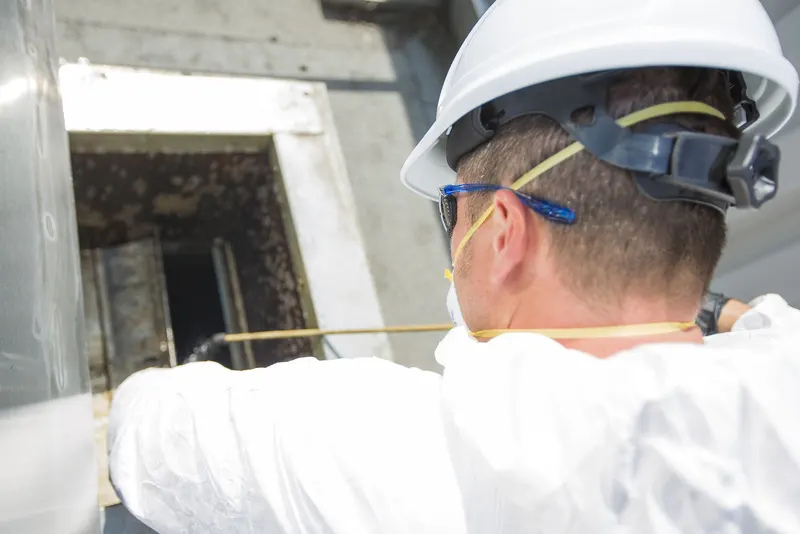
The heating and cooling ductwork in your dining room is a different system with different rules. A grease duct is sealed, fire-rated and built to hold a fire inside it. The risk it carries is a grease fire that travels upward through the building. That is why a restaurant owner who books the duct cleaning gets section-by-section photographs rather than a single before-and-after shot of the hood.
Shared risers in Downtown Kitchener and Uptown Waterloo buildings
Many brick blocks along King Street in Downtown Kitchener and Uptown Waterloo put a restaurant at street level with apartments or offices above. Some carry two or three kitchens that tie into one common riser. A clean run from one tenant still feeds into a riser loaded by the others.
The walk-through maps which kitchens connect to the riser and where the panels sit on each floor. Riser access usually runs through a hallway, a service closet or an upstairs unit, so the visit is booked with the property manager for overnight access. The quote spells out which sections belong to your kitchen and which belong to the shared riser, so the paperwork matches the lease.
Measuring 0.078 inches along the whole exhaust path
NFPA 96 uses 0.078 inches of grease as the cleaning trigger on general exhaust surfaces. A reading taken only at the hood tells you nothing about the elbow thirty feet down the run. The depth is checked at each panel before cleaning and photographed after, so your record shows the whole path. The Ontario Fire Code (O. Reg. 213/07) requires commercial cooking exhaust to be maintained in accordance with NFPA 96. The full picture is on the NFPA 96 guide.
How much does kitchen exhaust cleaning cost in Kitchener in 2026?
Kitchen exhaust cleaning in Kitchener starts from $585 per visit for a single-hood kitchen up to ten feet and from $995 per visit for a multi-hood kitchen. Long runs, multi-storey risers, campus and institutional systems are quoted on site after a free walk-through, with the written quote back within 24 hours.
Duct length, the number of elbows, riser height and the panel count set the hours. You can find kitchen exhaust cleaning near you in Kitchener, Waterloo, Elmira, St. Jacobs, New Hamburg and Baden at the same price list, with overnight scheduling and proof of WSIB coverage and liability insurance before work starts.
Next step: call 226-407-0573 or request a written quote. Tell us how many storeys the riser climbs and whether other tenants share it. Every service is listed on the services page.
Kitchen exhaust cleaning in Kitchener: frequently asked questions
Is restaurant duct cleaning the same as dining room ductwork cleaning?
Restaurant duct cleaning here means the kitchen exhaust duct only. That duct is sealed, fire-rated and carries grease. The heating and cooling ducts in your dining room are a separate system, so ask about them on the call.
What happens to a duct section with no access panel?
A duct section with no access panel cannot be cleaned, and the certificate names it as uncleaned. The walk-through flags those sections early so you can have your mechanical contractor add openings before the visit.
How is a shared riser handled in a building with several kitchens?
A shared riser is mapped at the walk-through: which kitchens tie in, where the panels sit and who holds the keys. The visit is booked overnight with the property manager, and the quote separates your run from the common riser.
Where is grease depth measured on a full-system visit?
Grease depth is checked at every access panel along the run and riser, not only at the hood. NFPA 96 uses 0.078 inches as the cleaning trigger on general exhaust surfaces, and the photographs record each section.
Does full-system cleaning include the rooftop fan?
Full-system cleaning runs to the top of the riser where the duct meets the fan. Belts, bearings, motors and hinge kits are mechanical work, covered on the exhaust fan repair page.