Commercial Kitchen Deep Cleaning in Kitchener
Commercial Kitchen Deep Cleaning in Kitchener is the restaurant cleaning service that reaches what a closing shift cannot: carbon baked onto fryer cabinets, grease packed into range knobs and charbroiler grates, film on the wall tile, and the floor under equipment that never moves. Kitchener Hood Cleaning pulls the line out, degreases each piece, washes the walls, ceiling and floor behind it, and photographs every surface before and after. The job is quoted per kitchen after a free walk-through, and it can run on the same night as your hood cleaning so the kitchen closes once.
Restaurant equipment cleaning: what gets degreased
Restaurant equipment cleaning starts with the pieces that cook with fat, because that is where grease builds fastest.
Fryers. The kettle gets drained and boiled out, but the cabinet, the door and the floor beneath collect splatter that turns dark and sticky. Each surface is degreased, and the flue at the back is cleared of carbon.
Ranges and ovens. Burner grates, drip trays, knobs and the gap between the range and the next unit hold grease that a wipe-down misses. The range is pulled from the wall so its sides and back get cleaned too.
Flat-tops and griddles. The cooking surface is scraped every shift. The splash guards, grease trough and the underside of the unit are not, and they are part of the deep clean.
Charbroilers. Grates, radiants and the catch pan below take the heaviest load in most kitchens. They come apart, soak, and go back together clean.
Equipment degreasing and the room behind the line
Equipment degreasing only finishes the job when the walls, ceiling and floor around the equipment are cleaned at the same time.
Grease vapour that escapes the hood settles on the nearest cool surface. On the wall behind the line, it turns tile grout brown. On the ceiling past the canopy edge, it collects dust and eventually drips. On the floor, it builds up in the corners and under equipment legs, where the mop never reaches. Once the equipment is pulled out, the crew washes the wall from ceiling to base, cleans the ceiling tiles or panels within reach of the line, and scrubs the floor, including the drains, before the equipment goes back.
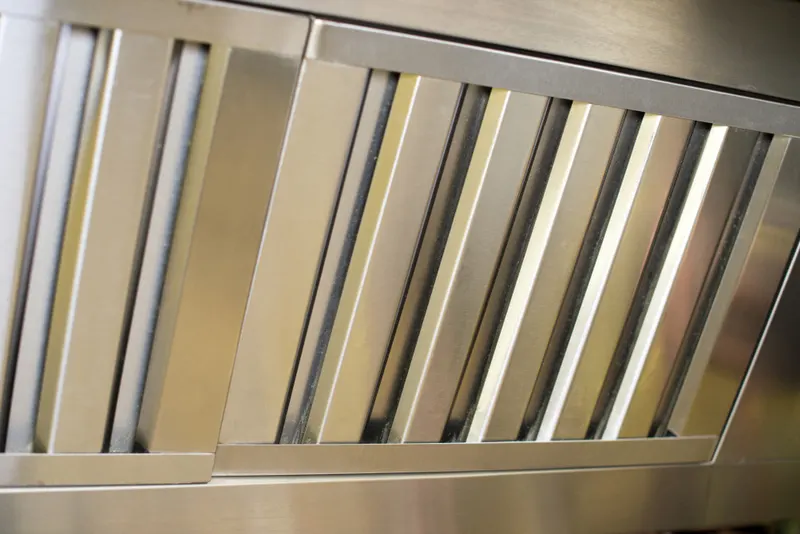
Anything that plugs in is disconnected first, and gas equipment is shut off at the valve. Chemicals are chosen for stainless steel and food-contact surfaces, and everything that touches food is rinsed before the line reopens. The hood itself is a separate scope, covered on the hood cleaning page.
Deep clean vs daily clean: what each one covers
A daily clean keeps the kitchen running. A deep clean resets it. One does not replace the other.
| Area | Daily clean (your staff) | Deep clean vs daily: what is added |
|---|---|---|
| Fryers | Oil filtered, front wiped | Cabinet, sides, flue and floor beneath degreased |
| Ranges and flat-tops | Top scraped, grates brushed | Pulled from the wall, sides, back and troughs cleaned |
| Charbroilers | Grates burned off | Grates, radiants and catch pan removed and soaked |
| Walls and ceiling | Splash zone wiped | Full wall height washed, ceiling near the line cleaned |
| Floors | Swept and mopped in open areas | Under every piece of equipment, corners and drains scrubbed |
What Region of Waterloo Public Health inspectors see
Region of Waterloo Public Health and Paramedic Services inspects food premises across Kitchener, Waterloo and the townships, and posts results through its Check It! We Inspect It. disclosure program.
Check It! We Inspect It. does not use a letter grade. Instead, a food premises can post an optional window sign with a QR code that links to its inspection results, which means a customer standing on the sidewalk can read what the inspector found. Inspectors look at the places a daily clean skips: the floor under the fryer, the wall behind the range, the ceiling above the line, and the sides of equipment that sit against each other. Buildup in those spots is visible on the first look.
A deep clean before a routine inspection, and the photographs from it, give you a clear record of when those areas were last cleaned. It does not replace the daily routine your staff runs, but it removes the buildup that daily cleaning cannot.
Best commercial kitchen cleaning in Kitchener: pair it with a hood visit
Pairing a deep clean with a hood cleaning visit means the kitchen closes once, the line is covered once, and one report covers both.
The hood crew needs the equipment covered and the floor protected, and the deep clean needs the equipment pulled out. Doing both on one overnight or between-service window saves a second shutdown. A pizzeria on Victoria Street, a campus servery in Waterloo or a golf club kitchen in New Hamburg preparing for spring opening all fit this pattern. The hood visit starts from $585 per visit for a single-hood kitchen up to ten feet. The deep clean is added as its own line on the same quote. If the duct also needs work, it is on the kitchen exhaust cleaning page, and the full list is on the services page.
How much do restaurant cleaning services cost in Kitchener in 2026?
Commercial kitchen deep cleaning in Kitchener is quoted per job after a free walk-through, with the written quote back within 24 hours. When paired with a hood visit, that visit starts from $585 per visit for a single-hood kitchen up to ten feet.
The price depends on how many pieces of equipment are on the line, how much floor and wall area sits behind it, and how long it has been since the last deep clean. The walk-through measures all three. How often the exhaust side should be cleaned is covered in the NFPA 96 guide.
Next step: call 226-407-0573 or request a written quote. A list of the equipment on your line is enough to start.
Commercial kitchen deep cleaning in Kitchener: frequently asked questions
How often should a commercial kitchen be deep cleaned?
Many kitchens book a deep clean on the same schedule as their hood cleaning, so the two share one night. The walk-through confirms what your line needs.
Do I need to close the kitchen for a deep clean?
The line has to be off and cool, so deep cleaning is scheduled overnight or between services. Most kitchens reopen for the next shift.
Is equipment degreasing safe for stainless steel?
Degreasers are chosen for stainless steel and food-contact surfaces, and everything that touches food is rinsed before the line reopens. Gas and electrical equipment is shut off before it is moved.
Will a deep clean help with a public health inspection?
A deep clean removes the buildup inspectors notice first, under and behind equipment. The before-and-after photographs also show when those areas were last cleaned.
Does the deep clean include the hood and filters?
The hood, filters and plenum belong to the hood cleaning scope. The two are often booked on the same night and quoted on one document, with each scope on its own line.